Username Stamped Forever: Z-TEXT vs the ID Theft Panic
Username Stamped Forever: Z-TEXT vs the ID Theft Panic
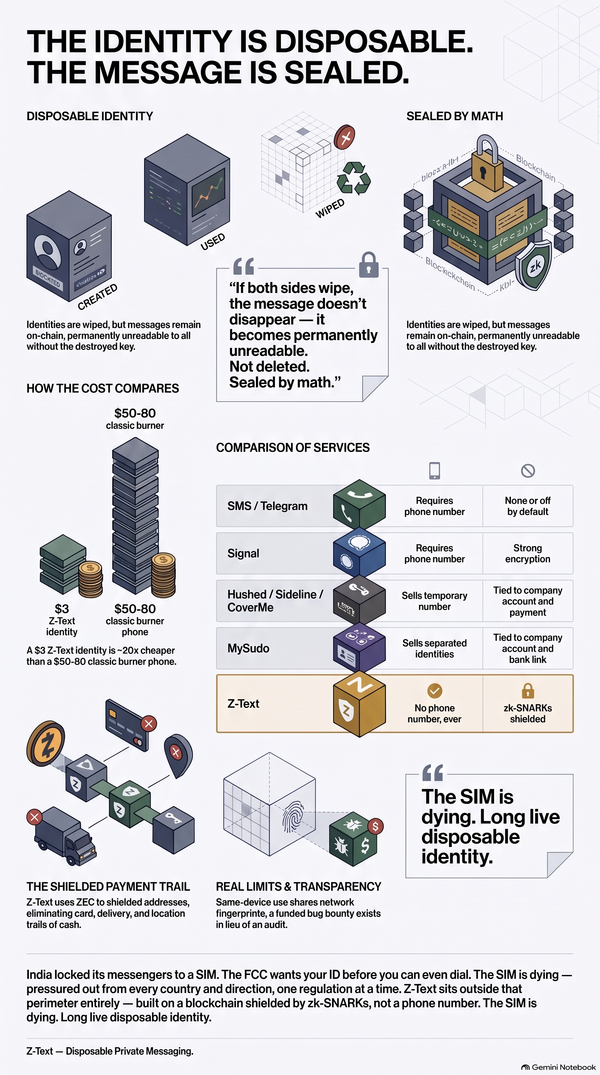
Z-TEXT is a zk-SNARKs blockchain messenger built on BitcoinZ, designed with zero metadata and no phone number requirement. That single design choice — dropping the phone number — is now at the center of a regulatory fight in India. Here's what happened, and how Z-TEXT already solves the problem regulators are worried about.
❓ Quick Verdict
India's IT Ministry has ordered WhatsApp to pause its new username feature and has questioned Telegram and Signal over the same feature. The concern: usernames replacing phone numbers make impersonation easier. Z-TEXT was built without phone numbers from day one — and adds something WhatsApp, Telegram, and Signal don't have: on-chain profile publishing with a cryptographically timestamped claim.
❓ What Actually Happened
On July 1, 2026, India's Ministry of Electronics and IT (MeitY) ordered Meta to halt WhatsApp's username rollout. WhatsApp's username feature lets users message each other without sharing a phone number. The government's concern: usernames could increase fraud, phishing, and impersonation, since anyone can attempt to register a name resembling a real person or organization.
On July 2, 2026, MeitY sent the same notice to Telegram and Signal, both of which already support username-based messaging.
Independent testing by TechCrunch found the impersonation risk was not just theoretical: usernames closely resembling public figures, including a variation on the Indian Prime Minister's name and a Bollywood actor's name, were reservable on WhatsApp during testing. Source: TechRadar.
❓ Why This Is Bigger Than WhatsApp
Usernames are being treated like digital real estate — first come, first served, with no independent proof of who registered what, or when. That's the actual gap regulators are pointing at. It's not the absence of a phone number that's risky. It's the absence of a verifiable, timestamped record of the claim.
❓ How Z-TEXT Is Different
WhatsApp / Telegram / Signal usernames
Centrally registered on a company server. No public, independent proof of claim date. Company alone decides disputes.
Z-TEXT published profile
Name and avatar can be published to the BitcoinZ blockchain. The claim is cryptographically timestamped and independently verifiable on-chain — not decided by a company's internal database.
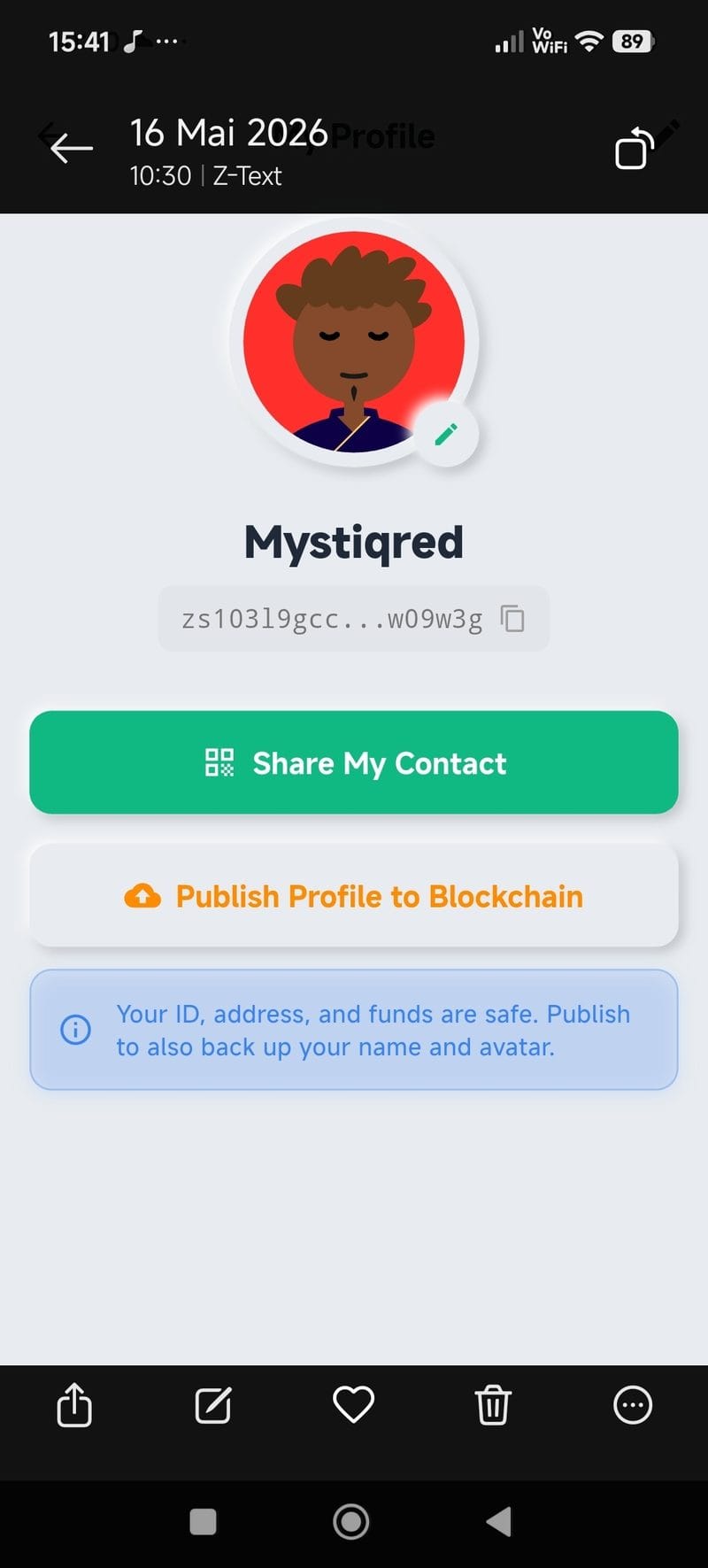
Z-TEXT profile — name and avatar can be published to the BitcoinZ blockchain, timestamping the claim.
❓ What "Shielded ID" Means Here
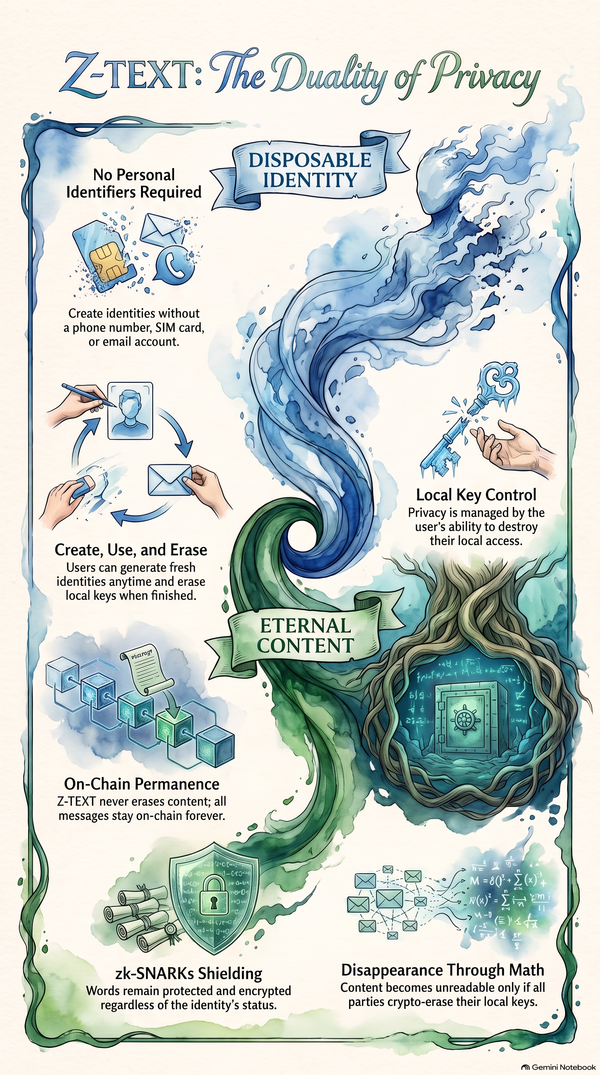
Z-TEXT's core identity is a shielded z-address, not a name. A published profile name and avatar sit on top of that shielded address. The avatar and display name are visible to whoever you share them with — but they carry no link back to a phone number, email, or real-world identity. Z-TEXT never asks for any of those in the first place.
❓ The Process
- Create your Z-TEXT identity from a 24-word seed phrase — no phone, no email, no SIM.
- Set a display name and avatar in your profile.
- Publish the profile to the BitcoinZ blockchain — this timestamps your claim to that name and avatar on-chain.
- Share your contact via QR or shielded address — the recipient sees your name and avatar, never your real identity.
❓ Common Questions
Does publishing my profile reveal who I am?
No. Publishing puts your chosen name and avatar on-chain — not your phone number, email, or IP address, none of which Z-TEXT collects.
Can someone else claim my name after I've published it?
Your claim carries an on-chain timestamp. Anyone can independently verify which claim came first — a public, checkable record WhatsApp-style usernames don't offer.
Is this the same as a phone-number-free username?
Same starting point — no phone number required — but Z-TEXT adds an independently verifiable, timestamped ownership record instead of a private company database entry.
❓ Final Verdict
The India username dispute is really a question about proof of ownership, not phone numbers themselves. Z-TEXT's answer: publish your profile on-chain, keep your real identity shielded, and let cryptography — not a company's internal database — settle who claimed what, and when.
🔗 Also read: Private Messaging Without Metadata