29 Messenger Apps Ranked: Blockchain and Privacy Route
We scored 29 messaging apps on 8 real-world criteria. Only 7 protect who you talk to — and just 5 of those can't expose it to any server at all. See where each one lands.
🔔 Update — September 2026: EU Chat Control 2.0 trilogue talks resume this month. The architecture comparison below is more relevant than ever — see where each messenger actually stands.
29 apps. 8 criteria, same scoring for all of them, alphabetically — from Discord to Signal to WhatsApp — Z-TEXT included, at the end, like everyone else.
Scoring is simple: 0 = doesn't do it, 1 = partial, 2 = full mark.
8 criteria, scored the same way for every app:
- Network size
- Media support
- Cost
- Ease of setup
- Phone compatibility
- Group features
- Metadata privacy
- Extras
Almost every private app protects what you say. Almost none protect who you talk to. And a real handful — the ones built on a blockchain or a distributed peer-to-peer network instead of a company's servers — can't be switched off by anyone.
Below, pick your top 3 priorities in order. This isn't a static ranking — it's a tool we coded so you get your answer, not ours.
Quick Take
Only 7 of 29 apps hide both message content and who's talking to whom — and just 5 of those can't expose that data to any server at all, even if the company wanted to. Blockchain-based, company-independent architecture is also the direction governments are moving, from the Bank of Japan to Wyoming's own state-issued digital currency. No app wins on every criterion here. This comparison shows the trade-off: convenience versus architecture.
Find Your Match
Everyone wants privacy. What are you willing to trade for it?
Pick your top 3 priorities, in order.
❓ Why these 8 criteria, and not others?
This comparison is built for the average person choosing a messenger, not a cryptography researcher auditing protocols.
That means some criteria a privacy specialist would prioritize, like protocol audit history or cryptographic primitive choice, aren't scored here. They matter. They're just not what decides whether most people actually switch apps.
Instead, these 8 criteria reflect what real people weigh: does everyone I know already use it, can I send photos and videos easily, is it free, can I set it up in two minutes, does it work on my phone, can I call my family, does anyone see who I'm talking to, and does it do anything extra.
💡 Mini-resume: This methodology intentionally prioritizes real-world usability over technical depth, because most readers are choosing a messenger for daily life, not evaluating cryptography for a security audit. A specialist-focused ranking would score differently.
❓ Does the messenger app alone make you private?
No. A privacy-focused app on a compromised phone is still compromised. Metadata privacy is a stack, not a single download.
The stack, in order of importance:
- Clean hardware — a phone without mandatory manufacturer bloatware or pre-installed tracking baked into the firmware. Google Pixel devices are the common choice, specifically because they support fully open-source alternative operating systems.
- Clean operating system — GrapheneOS is the leading example: a hardened, de-Googled version of Android that strips out Google's default tracking layer, installed in place of the stock software.
- Verified app installation — confirming the app file matches the developer's official release, rather than trusting an app store blindly.
- The messenger itself — the app-level choice this whole comparison is about.
There's a fifth layer most people never think about: how the message actually travels.
Two apps can both hide "who's talking to whom" at the app level and still differ completely underneath, depending on how the message physically moves from sender to receiver:
- Relay-based (WhatsApp, Telegram) — every message routes through the company's own servers. The company is a mandatory middleman; a subpoena or a breach hits one single target. That's the one most people are using right now.
- Peer-to-peer (Skype, Tox) — devices connect more or less directly to each other, which sometimes means your IP address is visible to whoever you're chatting with. Skype ran on this model for years before Microsoft moved it to centralized servers.
- Onion-routed (Session, Briar) — the message bounces through several independent relay nodes, so no single node sees both sender and receiver at once.
- Blockchain-based (Status, Z-TEXT) — messages travel as transactions across a distributed network of nodes, with no central operator at all. Still a rare model — only two apps in this comparison are built this way.
💡 Mini-resume:
No messaging app can protect metadata that the operating system or hardware underneath it is already leaking.
Readers who rank metadata privacy as their top priority should treat the phone and OS as part of the decision, not just the app.
Content encryption and sender/receiver privacy are necessary but not sufficient — the transport layer determines whether a single company, a single node, or nobody at all can see the full picture of who is talking to whom. This comparison's metadata privacy score accounts for both layers.
Of everything folded into this comparison's metadata privacy score, network-level exposure is arguably the deciding factor — it's the difference between data that's hidden and data that was never collected in the first place.
The Full Scoreboard
Sorted by overall score across 8 criteria. Full breakdown per app is in the picker tool above.
❓ If it's free, who's actually paying for it?
Every "free" app has a funding source. The question is whether you can see it.
Nonprofit / donation-funded:
- Signal — Signal Foundation, funded partly by WhatsApp co-founder Brian Acton
- Session — Session Technology Foundation
- Briar — Open Technology Fund + European digital rights grants
Corporate-owned:
- WhatsApp — owned by Meta
- Viber — owned by Rakuten
- WeChat — owned by Tencent, ad-supported
- KakaoTalk — owned by Kakao Corp, ad-supported
Founder-funded: Telegram — personally funded by Pavel Durov for years, now adds Telegram Premium subscriptions.
Direct payment: Threema — one-time purchase, no ads, no data sale.
Crypto-funded: Status runs on a token treasury (SNT) tied to Ethereum. Telegram also has a crypto arm — it co-created the TON blockchain and its Toncoin token, separate from the app's Premium revenue.
License-funded: Z-TEXT — the app is free to download; you activate the full 4-in-1 power with a software license instead of buying the app itself. No ads, no data collection, no investor board.
💡 Mini-resume:
No messaging app is free to run. Servers, developers, and infrastructure all cost money.
The real question isn't whether an app is free — it's who is funding it, and what that funder expects in return. Ad-funded apps optimize for engagement and data collection.
Threema and Z-TEXT both put that cost directly on the user instead of an advertiser — Threema as a one-time app purchase, Z-TEXT as a software license.
❓ How many of the 29 actually protect your metadata?
7 apps score full marks on encryption plus minimal exposure design — alphabetically: Briar, Jami, SimpleX, Status, Threema, Wire, Z-TEXT.
But there's a real distinction within that 7. Five of them — Briar, Jami, SimpleX, Status, Z-TEXT — are architecturally incapable of exposing sender-receiver metadata to any server, because no single server or node ever sees both sides of the conversation. The other two — Threema, Wire — route through a relay server that technically could see who's messaging whom, and rely on a strict no-logging policy rather than an architecture that makes logging impossible.
Encrypted content means nobody can read what you said. Metadata means everybody can still see who you said it to, when, and how often — and that pattern alone can out an affair, a source, a protest organizer, or a diagnosis, without a single word being decrypted. Most people worry about being overheard. They should worry about being mapped.
That's also why so many "free" apps stay free: metadata is the product. An advertiser doesn't need to read your messages to sell you something — knowing who you talk to, when, and how often is already enough to build a profile worth monetizing.
💡 Mini-resume: Encrypting a message's content is the easy part. Hiding who sent it and who received it is the hard part — 7 of 29 apps do both well, and 5 of those don't expose that data to any server at all, by design.
❓ How do these 7 actually pull it off?
There's no single trick to hiding metadata — each one solves it differently:
- SimpleX — no persistent user ID at all. Instead of accounts, it uses one-way message queues that don't link back to a permanent identity.
- Session — messages route through onion-routed service nodes (similar to Tor), so no single node sees both sender and receiver.
- Briar — peer-to-peer over Tor by default, so there's no central server to subpoena in the first place.
- Jami — fully distributed, peer-to-peer, using a distributed hash table instead of company servers.
- Wire — built on the MLS encryption standard, designed to minimize what server-side metadata even exists.
- Threema — assigns a random ID instead of a phone number or email, so there's no personal identifier to trace back.
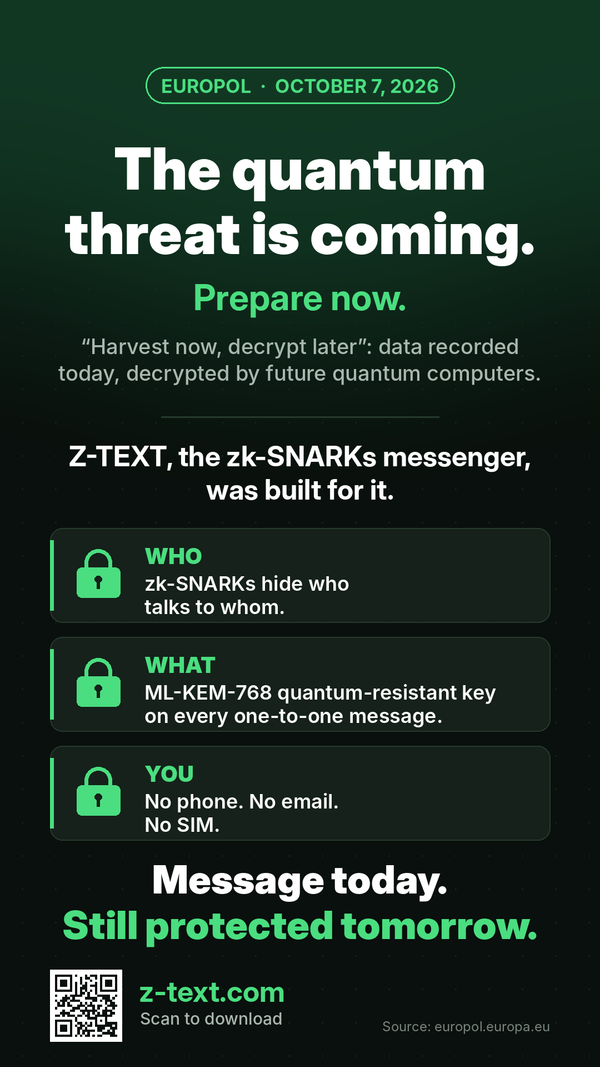
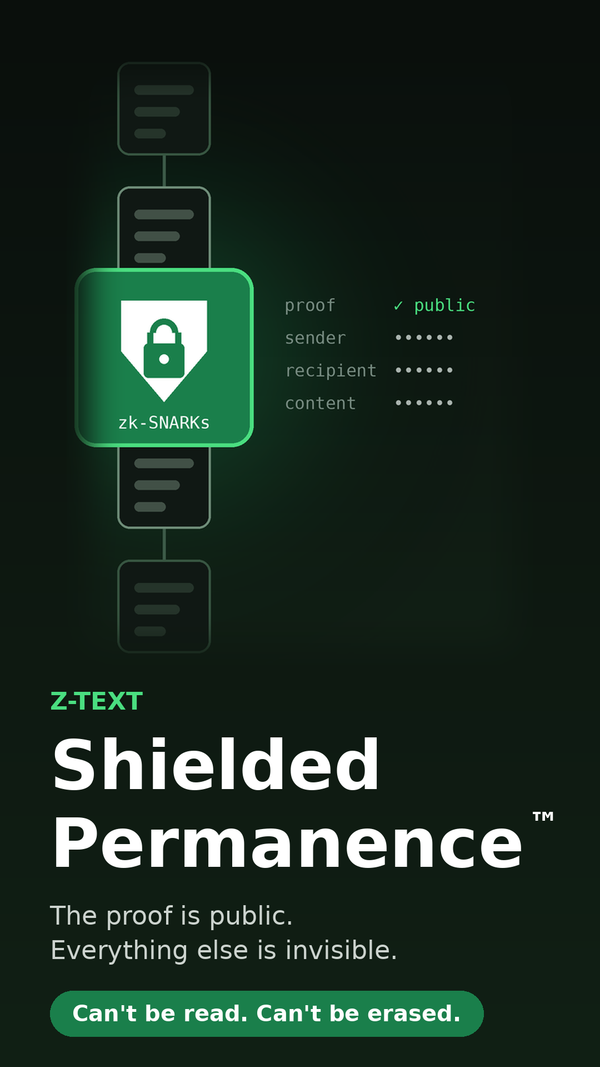
- Z-TEXT — routes messages as shielded blockchain transactions using zk-SNARKs, a form of zero-knowledge proof that verifies a transaction happened without revealing sender, receiver, or content to the network.
💡 Mini-resume: Each of these 7 apps made a deliberate architecture decision early on, not a feature bolted on later — from onion routing to distributed networks to zero-knowledge proofs.
❓ What happens if the company behind your app disappears?
It has already happened, twice, in this exact list. Wickr was a well-funded, Amazon-owned encrypted messenger. Amazon shut down the free consumer version entirely on December 31, 2023, for business reasons unrelated to any security failure. Skype is the more striking case: Microsoft bought it in 2011 for $8.5 billion, once the world's most-used calling app with more users than Facebook at the time. Microsoft shut it down completely on May 5, 2025.
Both now score 0 across every criterion here, not because the tech failed, but because the company decided to stop running the servers.
Where does your app land?
- Server-dependent, no personal recovery — the account only exists on the company's server; if it shuts down, there's nothing to restore: Discord, DingTalk, Facebook Messenger, QQ, RedNote, Skype (discontinued), Snapchat, Weibo, Wickr (discontinued).
- Phone-number tied — your identity is your phone number, verified through the company's own servers: Google Messages, iMessage, KakaoTalk, Line, Signal, Telegram, Viber, WeChat, WhatsApp, Zalo.
- Recovery phrase, company-independent — a seed phrase restores your identity on any device, no company server required: Session (13 words), Status (12-word wallet seed), Z-TEXT (24 words).
- Local ID/key, manual backup required — no company server holds your identity, but recovery takes a manual step: Jami (peer-to-peer, local-only), SimpleX (no ID, local-only), Threema (password-protected ID export), Tox (peer-to-peer, local-only), Wire (password-protected manual backup).
- No backup available — Briar has historically offered no account backup at all; losing the device means losing the identity entirely, a real limitation worth naming honestly.
💡 Mini-resume: A messenger built on a company's servers only exists as long as that company decides to keep running them. Session, Status, and Z-TEXT take a different approach — a recovery phrase restores your identity on any device, independent of any company's servers.
❓ What does "disappearing messages" actually delete — and what does it leave behind?
Most private messengers offer a timer that deletes a message after a set period — Signal, Telegram, WhatsApp, Threema, and Session all have some version of this, usually optional. But "deleted" means different things depending on where the deletion happens:
- On the device — the message disappears from your screen and your contact's screen. That's the part everyone sees, and the part that feels like privacy.
- On the server — whether the message was ever stored there in the first place, and for how long, depends entirely on the app's architecture. A relay-based app still routed that message through a company server before the timer ever started, and connection logs — who talked to whom, when — often outlive the message itself.
- On the network — a small number of apps, including Session, Briar, and Z-TEXT, are built so metadata about the conversation isn't exposed to any server or node in the first place. For those, there's structurally less to delete later, because less was ever exposed to begin with.
💡 Mini-resume: "Disappearing messages" deletes what's on the screen, not necessarily what was exposed to a server or network along the way. A handful of apps — including Session, Briar, and Z-TEXT — are built so less metadata is exposed to begin with, which matters more than how fast it's deleted afterward.
❓ Blockchain and Privacy, Together: Z-TEXT's Route
Run the tool above with any combination of priorities. Z-TEXT won't top most combinations, and that's the honest result of a scoreboard built the same way for all 29 apps. It's new. It has no group calling yet. Most people haven't heard of it.
But no other app on this list combines the same three things at once:
- zk-SNARKs zero-knowledge proofs shielding sender, receiver, and content on-chain
- A single 24-word seed that recovers the account with no company server involved
- Messages that live permanently on a public blockchain instead of a company's servers
This isn't a bet. It's a technical choice — and the direction the wider financial world is already moving.
The Bank of Japan is expanding its own blockchain settlement infrastructure for central bank reserves in 2026.
Closer to home, Wyoming — where Z-TEXT LLC is incorporated — became the first U.S. state to issue its own blockchain-based digital currency, the Frontier Stable Token (FRNT), publicly available since January 2026. A second state token, WYST, launched this same month.
Governments are moving toward blockchain for the same reason a decentralized network solves it: no single point of failure, no single company that can shut it off.
What most of those systems don't add is the privacy layer.
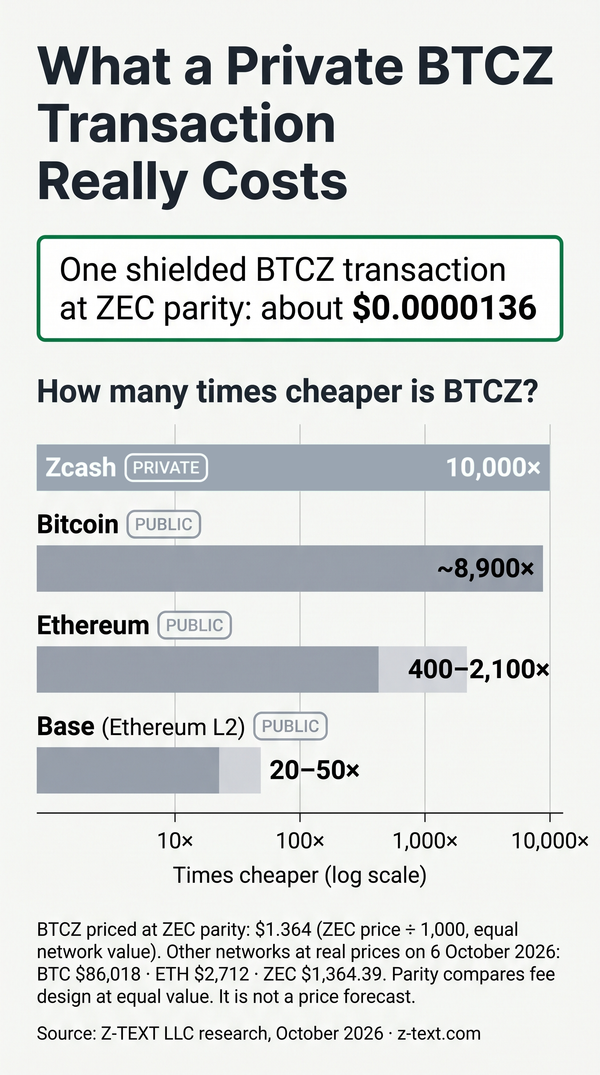
zk-SNARKs makes that possible on top of a decentralized, miner-run network — at a fraction of the infrastructure cost of running private servers, and without a company standing between you and your own data.
That's the choice underneath this whole comparison: clean architecture over crowd size.
What This Comparison Actually Shows
- Blockchain-based, company-independent architecture is where governments are heading too — from the Bank of Japan's own settlement infrastructure to Wyoming's state-issued digital currency.
- 29 apps, 8 criteria, same scoring for all.
- Encryption is common. Hiding who's talking to whom isn't — only 7 of 29 do both.
- The gap comes from transport: relay servers, peer-to-peer, onion routing, or blockchain. Status and one other app here use blockchain.
- Wickr and Skype are both gone — not from broken encryption, but a company shutting down servers. Apps with a recovery phrase instead of a company account don't carry that risk.
- "Free" always has a funding source. Ad-funded apps monetize the metadata trail; license- and token-funded apps put the cost on the user instead.
- Disappearing-message timers clean up after exposure. A few apps are built so there's less to expose to begin with.
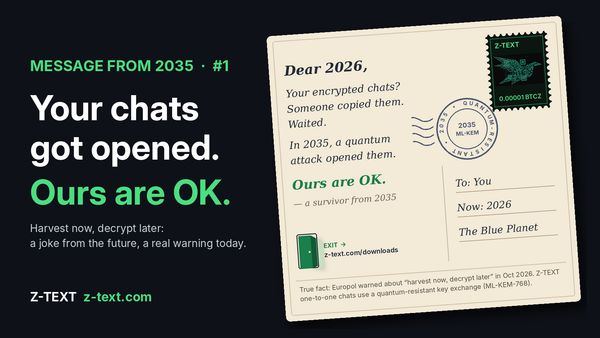
- Z-TEXT is the only app here using zk-SNARKs — a zero-knowledge proof that verifies a message happened without ever revealing sender, receiver, or content.
No app wins everywhere. This comparison doesn't crown a winner. It shows one trade-off: convenience versus architecture. Pick your top 3 above and see where each of the 29 lands.
Sources & Further Reading
- Z-TEXT Official Website
- BitcoinZ Blockchain — Why BTCZ?
- Wikipedia — Zero-Knowledge Proofs
- Electronic Frontier Foundation
- Wikipedia — Wickr
- Wikipedia — Skype
- GrapheneOS
- Bank of Japan — Blockchain Settlement Sandbox (CoinDesk)
- Wyoming Governor's Office — Frontier Stable Token (FRNT) Launch
- Threema — Official FAQ, Data Handling
- Session — Official Docs, Account Restoration
- Tox Project — Official Site
- SimpleX Chat — GitHub, Trail of Bits Security Audits
- Element — Official Help, Recovery Key
🔗 Also read: Signal vs Z-TEXT · WhatsApp vs Z-TEXT · Session vs Z-TEXT · Telegram vs Z-TEXT · Z-TEXT 3-in-1 · The Third Man
private messaging app · secure messaging app · encrypted messenger app · blockchain messenger · zero-knowledge proof messenger · Signal alternative · Telegram alternative · zk-SNARKs messenger · no phone number messaging app